
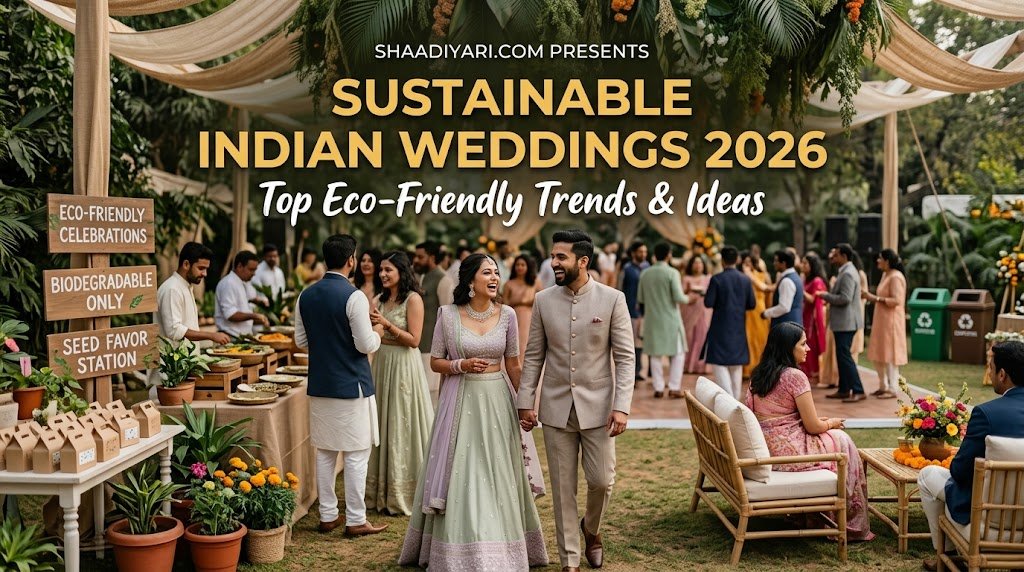
Indian weddings have long meant grandeur: huge guest lists, towering decor and celebrations that run for days. But a shift is under way. The new-age wedding is as much about conscience as couture, and sustainable weddings are becoming India’s new big trend. Couples are proving that a wedding can be joyful, traditional and beautiful without leaving a heavy footprint.
This guide covers the top eco-friendly trends and practical ideas for 2026, so you can plan a greener wedding without compromising on the celebration.
Why Sustainable Weddings Are on the Rise
A single big wedding can generate a lot of waste: plastic decor, single-use items, surplus food and heavy travel. Couples today are thinking about this more. Sustainable decor is now seen as leading the trend this year, with minimal waste and natural elements like potted plants, recycled materials and organic colours.
The good news is that going green doesn’t have to cost more. Reusing decor, choosing digital invites and supporting local businesses can actually lower your costs.
Choose a Sustainable Venue
Your venue shapes your footprint more than almost any other decision.
- Pick a venue with natural light and open spaces so you need less lighting and air conditioning.
- Look at gardens, farmhouses, eco-resorts and heritage properties. The shift has been toward forest weddings and garden ceremonies, with natural locales serving as the backdrop.
- Choose a place where most guests can stay on-site to cut down on daily travel.
- Ask about the venue’s waste management, water use and power backup practices.
Browse wedding venues on Shaadiyari and shortlist ones with open lawns and natural settings.
Biodegradable and Reusable Decor
Decor is where most wedding waste comes from, and where the biggest changes are happening.
- Fresh, seasonal, local flowers instead of imported ones. Marigold (genda) is a standout: with a long blooming season and wide availability, it’s a great way to add floral magic.
- Reusable installations: floral structures, frames and fabric drapes that can be used across functions or rented again.
- Potted plants that guests can take home after the event.
- Natural materials like bamboo, jute, terracotta, brass, banana leaves and cane.
- Indian crafts as decor: terracotta, kolam art, kalamkari, Madhubani paintings and Thikri art all make beautiful, culturally rooted backdrops.
- Fewer plastic items: skip thermocol, glitter, balloons and single-use foam.
Tip: Ask your decorator what happens to the flowers and materials after the event. Good vendors donate, compost or reuse.
Digital and Plantable Invitations
Invitations are a small but visible place to start.
- Send digital invites and e-cards to most guests. They’re quick, low-cost and shareable.
- For elders who prefer physical cards, print limited copies on recycled paper with eco-friendly ink.
- Try seed paper invites. Printed versions are increasingly made with seed paper and recycled materials, giving guests a tangible but eco-friendly keepsake.
Zero-Waste, Locally Sourced Catering
Food waste is one of the biggest sustainability challenges at Indian weddings. A huge amount of food is wasted during Indian weddings. You can reduce it with simple steps:
- Plan menus realistically. Work with your caterer on portions based on the confirmed guest count.
- Go local and seasonal. Farm-to-table dining and locally sourced ingredients are growing trends and add authenticity to your menu.
- Use reusable crockery, steel and glass rather than disposable plates and cups.
- Partner with a food donation group to pass on untouched surplus food safely.
- Add plant-forward dishes to reduce your menu’s footprint.
Ethical, Reusable Bridal and Groom Wear
Fashion is an exciting part of the green wedding movement.
- Heirloom sarees and lehengas: The return of heirloom saris, vintage embroidery and reimagined family jewels reflects a move toward personal heritage over fast fashion.
- Handloom fabrics: Handwoven fabrics like Banarasi and Chanderi, or organic silk, are becoming a preferred choice, along with eco-friendly bridal jewellery.
- Outfits you can re-wear: Choose pieces you can restyle for future occasions, like dupattas, blouses and jackets.
- Groom’s look: A handwoven khadi kurta pajama with a classic Nehru jacket is a stylish, sustainable option.
- Rent or borrow outfits for secondary functions.
Explore bridal wear and groom wear options on Shaadiyari.
Smaller, More Intentional Guest Lists
A smaller wedding is one of the most effective ways to cut your footprint. A smaller guest list also means easier budget management, less vendor chaos and simpler logistics. Fewer guests means less food, less decor, fewer vehicles and less waste.
Eco-Friendly Wedding Favours and Gifts
- Plantable favours: seeds, saplings and small potted plants
- Local handicrafts that support artisans
- Compostable or reusable packaging instead of plastic
- Charity donations in guests’ names instead of physical gifts
Greener Travel and Accommodation
- Arrange shared transport or shuttles between venues and hotels.
- Choose a venue that offers on-site stays.
- Consider offering guests a green travel guide with eco-friendly travel options and accommodations.
Eco-Friendly Photography and Tech
Technology can help you cut waste too. Use digital albums and online galleries instead of heavy printed albums, and live-stream the ceremony for relatives who can’t travel. When you hire a wedding photographer, ask about digital-first delivery.
Mindful Rituals
You can keep every tradition and still be thoughtful. Use natural kumkum and turmeric, flower petals instead of plastic confetti, clay diyas instead of electric lights, and organic or biodegradable materials for havan and puja items. For mehendi, choose natural henna from a trusted mehendi artist rather than chemical cones.
Is a Sustainable Wedding More Expensive?
Not necessarily. Some choices cost a little more, like organic fabrics, but many save money:
- Digital invites cut printing costs.
- Seasonal flowers cost less than imported ones.
- Reusing decor across functions reduces spend.
- A smaller guest list reduces food, rooms and logistics costs.
Focus on two or three high-impact changes rather than trying to do everything.
A Simple Eco-Friendly Wedding Checklist
- Choose a natural, open venue with on-site stays.
- Send digital invitations.
- Use seasonal, local flowers and reusable decor.
- Plan portions with your caterer and arrange food donation.
- Avoid single-use plastic and thermocol.
- Choose handloom, heirloom or re-wearable outfits.
- Give plantable or locally made favours.
- Arrange shared transport.
- Ask every vendor about their waste and reuse practices.
- Keep records, then share what worked with other couples.
A sustainable wedding is not about giving up celebration. It’s about being thoughtful. As one report puts it, couples are crafting weddings that are not just beautiful to witness, but meaningful to remember. Start with a few changes that feel right for you, and let your wedding show that love and care for the planet can go together.
Ready to plan a greener celebration? Explore venues, photographers, decorators, caterers and mehendi artists on Shaadiyari and connect with vendors who fit your vision.