
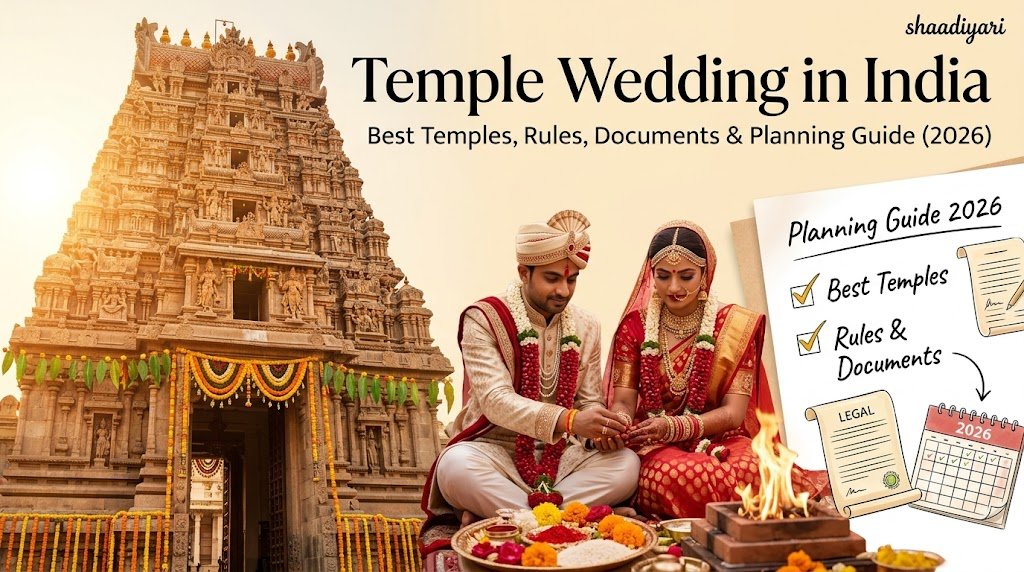
Not every couple dreams of a grand banquet. For many, the most meaningful wedding is a simple one: a sacred setting, family around you, the priest’s mantras and the deity’s blessings. That’s what a temple wedding offers.
Temple weddings are growing in popularity across India. One report describes the trend as moving away from the flash and pomp of weddings in halls and hotels, and as a return to the original conception of a Hindu wedding ceremony. This guide covers popular temples, documents, legal registration, costs and planning tips.
Why Choose a Temple Wedding?
- Spiritual meaning: You begin married life in a sacred space, with blessings from the deity.
- Simplicity: A smaller guest list and fewer elaborate arrangements.
- Lower costs: Many couples save on venue, decor and catering. Costs still vary, so ask the temple and your pandit.
- Less stress: Temples often have set procedures and priests who know the rituals.
- Beautiful settings: Ancient architecture, mountain backdrops and riverside locations.
Popular Temples for Weddings in India
Always confirm with the temple office whether weddings are currently allowed, as temple rules can change. For example, a historic Bengaluru temple, Halasuru Someshwara Swamy Temple, stopped conducting weddings on its premises in late 2025.
Triyuginarayan Temple, Uttarakhand
Considered the sacred site where Shiva and Parvati were married, this Garhwal temple is a leading choice. During wedding season, over 100 weddings take place here every month, and ceremonies follow Vedic traditions, require prior registration and must be conducted in the presence of parents or guardians. Pre-wedding functions are usually held where the wedding party is staying, with parties of 30 to 50 people, and the rituals take place at the temple’s wedding mandap.
Tirupati Balaji Temple, Andhra Pradesh
Many couples choose a straightforward but spiritual wedding here, followed by distribution of the famous Tirupati laddus to guests.
Meenakshi Amman Temple, Madurai, Tamil Nadu
Known for its towering gopurams and carvings. The temple complex is popular for traditional weddings, and the temple issues an official marriage certificate that can be used for legal registration.
Guruvayur Temple, Kerala
At Guruvayur, the pre-wedding phase focuses mainly on registration, verification and readiness, not on elaborate rituals inside the temple. Due to high demand, early booking is strongly recommended.
Brihadeeswara Temple, Thanjavur, Tamil Nadu
A UNESCO World Heritage site famous for its architecture and sacred atmosphere. Check current rules, since heritage sites often limit ceremonies.
Khajuraho, Madhya Pradesh
Khajuraho offers a backdrop of history, art and spirituality, and its UNESCO World Heritage status adds distinction. Many couples choose the active temple within the complex, so confirm which temples permit ceremonies.
Kashi Vishwanath Corridor, Varanasi
The renovated Kashi Vishwanath Temple corridor has emerged as one of the more popular temple wedding destinations.
Other options
Arya Samaj mandirs across India offer simple Vedic ceremonies, and Mahakal in Ujjain, Kedarnath-Badrinath region temples and Murugan temples near Madurai also attract couples. Always check each temple’s policies directly.
Legal Side: Is a Temple Wedding Valid?
Yes, if legal requirements are met. A temple marriage is equally valid if the requirements of the law are fulfilled. In practice, that usually means a valid Hindu ceremony between eligible partners and then registration.
Register your marriage. With states enforcing compulsory marriage registration, registering at the Sub-Registrar’s or SDM office after a temple wedding is essential, and the resulting certificate is the main legal proof. If you lack a formal temple certificate but have photographs and an invitation card, you can still apply, though the registrar may ask for extra affidavits from witnesses. Most states now have online portals, and some offer Tatkal registration with certificates within 24 hours.
Arya Samaj weddings. Arya Samaj temples across India provide a route where the certificate and photographs can be used to register the marriage under the Special Marriage Act, 1954.
This is general information, not legal advice. Rules differ by state and religion, so check with a local lawyer or the registrar’s office.
Documents Usually Required
Requirements differ by temple and state. Commonly requested items include:
- Age proof and birth certificates for both partners
- Address proof (Aadhaar or similar)
- Passport-size photographs
- Wedding invitation card (some temples ask for this)
- Affidavit or unmarried-status certificate
- Parents’ or guardians’ ID and consent
- Witness details
One temple staffer in Chennai described needing birth certificates, address proof, age proof and a tahsildar-attested document. Ask the temple office for its exact list well in advance.
Step-by-Step Planning Guide
- Choose your temple and confirm weddings are allowed. Call or visit the temple office.
- Fix the muhurat with a pandit, then check the temple’s available dates.
- Book early. Popular temples fill up fast during wedding season.
- Collect documents and get any attestations done.
- Book accommodation and a hall nearby for pre-wedding functions, meals and rest. Many temples don’t allow elaborate functions on premises.
- Arrange the priest and puja items. Confirm who provides what.
- Plan food. Check with the temple administration about what food you can serve and follow their rules.
- Plan travel for guests, especially for hill or remote temples.
- Register the marriage soon after the ceremony.
Dress Code and Etiquette
- Traditional attire is expected. Think sarees, lehengas, salwar suits, kurta-pajama or dhoti. Some temples have strict rules, so check in advance.
- Keep it simple. Floral jewellery is a lovely idea. Floral jewellery can add aesthetic charm to a temple wedding.
- Inform guests of rules, including photography limits and footwear policies.
- Observe temple rules with respect. Leave the premises promptly once the rituals and blessings are done.
- Avoid loud music, firecrackers and elaborate props unless permitted.
Photography and Videography
Many temples limit photography inside the sanctum or require permission or a fee. Talk to the temple office before booking a wedding photographer. Ask whether photographers can enter, whether drones are allowed (often they aren’t), and which areas are off-limits. Many couples do portraits outside the sanctum or at a nearby venue.
How Much Does a Temple Wedding Cost?
I haven’t included specific figures, as costs vary widely. They depend on the temple’s fees, pandit, hall booking, guest travel, accommodation, food and photography. As a rule, a temple wedding costs less than a large banquet wedding, but popular temples and destination locations can still add up with travel and stays.
Money-saving tips:
- Keep the guest list small.
- Book off-peak dates where your muhurat allows.
- Use a simple hall or guesthouse for meals.
- Compare vendor quotes for photography and catering.
Combining a Temple Wedding with a Reception
A popular approach is a temple ceremony for close family, followed by a reception at a venue for extended family and friends. This keeps the sacred ceremony intimate while still letting you celebrate with everyone.
You can also add a mehendi artist, bridal wear and other vendors for pre-wedding functions held away from the temple.
Common Mistakes to Avoid
- Assuming a temple will host weddings without checking current rules
- Booking late for peak season
- Missing documents or attestations
- Forgetting to register the marriage afterwards
- Not informing guests about dress code and photography rules
- Underestimating travel time for remote temples
A temple wedding is a chance to focus on what matters: vows, family and blessings. With the right temple, early planning and the correct paperwork, it can be simple, affordable and unforgettable.
Planning a temple ceremony plus a celebration? Explore venues and trusted vendors on Shaadiyari.