
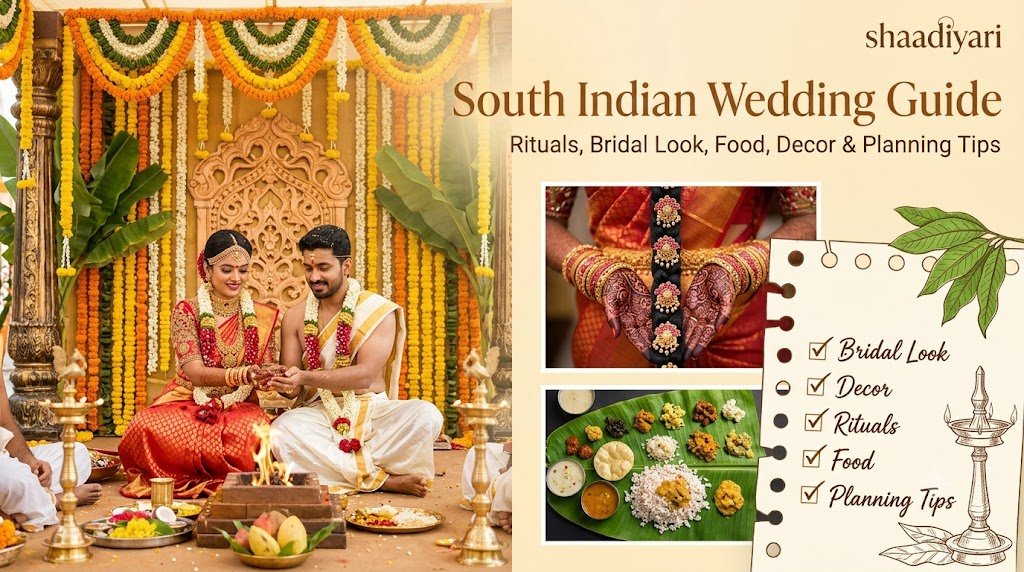
South Indian weddings are known for their grace, devotion and deep-rooted ritual. One wedding guide describes them as honouring a legacy, reminding everyone of the beauty of enough in a world of louder, trend-driven celebrations. Silk sarees, temple jewellery, fragrant jasmine, banana-leaf meals and Vedic chants come together to create a celebration that feels both sacred and joyful.
Whether you’re planning a South Indian wedding, marrying into a South Indian family or just curious about the traditions, this guide covers the rituals, looks, food, decor and practical planning tips.
What Makes South Indian Weddings Special?
South Indian weddings include Tamil, Telugu, Kannada and Malayali traditions, and each has its own flavour. They are generally shorter, often 2 to 3 days, held in the morning, and lower-key in volume but rich in ritual. Another source notes that South Indian wedding rituals emphasise simplicity, spirituality and adherence to Vedic customs.
Customs vary by state, community and family, so treat this guide as an overview. Always talk to elders and your priest about the exact rituals your family follows.
Common Rituals Across South Indian Weddings
Names differ by language and region, but you’ll often see these elements:
- Horoscope matching and fixing the muhurtham: Families check compatibility and choose an auspicious date and time.
- Engagement (Nischayathartham, Nischitartham): The formal agreement between families, often with an exchange of gifts and sweets.
- Pre-wedding rituals: These are like a series of mini celebrations that can sometimes last about a week.
- Kashi Yatra: A fun, playful ritual performed fondly in most weddings, where the groom pretends to leave for a pilgrimage and is persuaded to marry instead.
- Kanyadaanam: Considered one of the most important rituals, symbolising the complete acceptance of the bride into the groom’s family.
- Mangalya Dharanam (tying the thali or mangalsutra): The key moment of the wedding.
- Saptapadi, mandap rituals, Jaimala and Grihapravesh follow in most traditions.
Tamil Wedding: Key Traditions
Tamil weddings are known for their detailed ritual structure and elegant simplicity.
- Pandakaal Muhurtham: One of Tamil culture’s most significant pre-wedding rituals.
- Nalangu: A gentle, devotional haldi-style ceremony. One guide notes that unlike the more playful North Indian haldi, South Indian versions like Nalangu and Pellikuthuru are gentler and more devotional.
- Oonjal (swing ceremony): The couple sits on a swing while elders sing and offer blessings.
- Thali tying: The groom ties the thali (mangalsutra) around the bride’s neck, usually at the muhurtham.
- Bridal look: A silk saree, often Kanjivaram, with temple jewellery and fresh jasmine in the hair.
Telugu Wedding: Key Traditions
A Telugu wedding is one of the most vibrant and deeply traditional ceremonies in South India, especially in Andhra Pradesh and Telangana.
- Pellikuthuru: The Telugu pre-wedding ritual with turmeric and blessings, equivalent to the Tamil Nalangu.
- Mangala Snanam: A ritual bath before the wedding, with oil and turmeric.
- Jeelakarra-Bellam: A traditional Telugu wedding ritual where cumin and jaggery are placed on each other’s heads, symbolising the couple’s lasting bond.
- Role of family: The bride’s maternal uncle and her brother play a prominent role in the wedding.
- Serving food: In Telugu weddings, the bride and groom serve food to guests after the marriage.
- Modern fusion: Telugu Hindu weddings today often include North Indian sangeet and mehendi alongside Mangala Snanam and Deeparadhana, with a Western-style reception.
Kannada Wedding: Key Traditions
Kannada weddings share many Vedic elements with other South Indian traditions and have their own regional touches.
- Rituals often include Nischaya, Kashi Yatre, Dhare Herdu (Kanyadaan) and Mangalya Dharane, with variations by community.
- Setting: Weddings are often held in temples, kalyana mantapas and Mysore-style venues.
- Bridal look: Mysore silk or Kanjivaram sarees, traditional gold jewellery and flowers.
Malayali (Kerala) Wedding: Key Traditions
Kerala weddings are usually compact and elegant, with distinctive traditions.
- Bridal look: Kasavu (cream and gold) sarees or silk sarees, with generous gold jewellery. One guide notes that a Malayali bride wears a lot of jewels, whereas a Tamil bride wears simple silk attire.
- Rituals: Hindu, Christian and Muslim weddings in Kerala each have their own customs. Nair weddings, for example, begin with matching horoscopes and fixing the auspicious time, and the stage setting is done in a specific way.
- Temple weddings: Guruvayur is one of the most popular choices, and bookings are in high demand.
- Sadhya: The traditional vegetarian feast served on a banana leaf.
The South Indian Bridal Look
Silk is the star. Together, the silk saree and its accompanying elements transform the bride into a goddess, in how she looks and how she carries herself.
- Sarees: Kanjivaram, Mysore silk, Pochampally, Kasavu and other handlooms. Rich reds, maroons, greens and golds are classic, and many brides now choose pastels or contrast borders.
- Jewellery: Temple jewellery with gold, kemp stones and pearls. Typical pieces include haram, maang tikka, vaddanam (waist belt), jhumkas and bangles.
- Hair and flowers: Jasmine (mallige, mulla poo) braids and floral jadas are a signature element.
- Makeup: Fresh, radiant and traditional. Bindi and sindoor are key.
- Mehendi: Many modern South Indian weddings now include mehendi, often with South-meets-North designs.
Browse bridal wear and bridal makeup artists on Shaadiyari.
Groom’s Attire
- Traditional: Veshti or dhoti with angavastram, often in cream and gold.
- Modern: Silk kurta with a dhoti, or a sherwani for the reception.
- Details: A simple garland, turban or traditional accessories, depending on the community.
See groom wear options.
South Indian Wedding Decor Ideas
South Indian decor tends to feel warm, natural and devotional.
- Floral mandap: Marigold, jasmine and rose garlands in rich colour combinations.
- Banana trees and mango leaves at the entrance, a traditional sign of auspiciousness.
- Brass lamps (kuthuvilakku, diyas) with oil lamps and thoranams.
- Kolam or rangoli at the entrance.
- Traditional elements: Brass vessels, temple-style pillars and silk drapes.
- Oonjal swing decorated with flowers as a visual centrepiece.
If you want a sustainable look, many of these elements, such as banana leaves, flowers and brass, fit naturally into a green wedding.
South Indian Wedding Food
Food is a big part of the experience.
- Banana-leaf meal: Served in a traditional order, with rice, sambar, rasam, curd, poriyal, kootu, payasam and more.
- Regional specialities: Idli, dosa, pongal and filter coffee at breakfast. Kerala sadhya, Andhra meals and Karnataka-style meals each have unique dishes.
- Sweets: Payasam, mysore pak, laddu and jangri.
- Practical tip: Wedding meals are usually vegetarian for Brahmin and many other Hindu weddings, but this varies by community and family.
Talk to your caterer about the exact menu and serving style, and confirm whether the venue allows outside caterers. Browse wedding caterers if you need help finding one.
Venues for South Indian Weddings
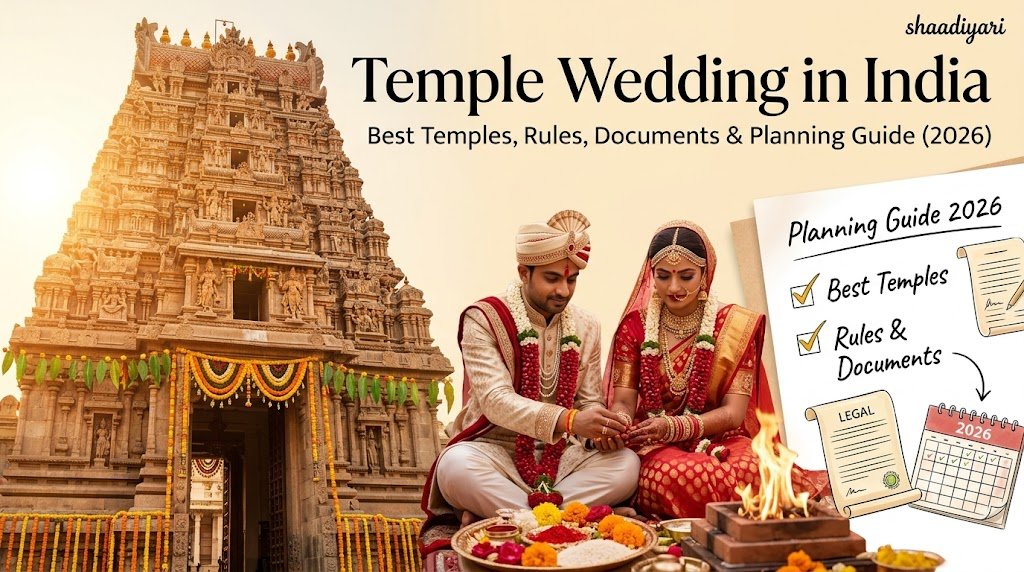
- Temples: Many families prefer temple ceremonies, often followed by a reception. See our guide on temple weddings in India.
- Kalyana mandapams and wedding halls: Designed for long morning muhurtham ceremonies.
- Heritage properties and resorts: Popular for destination weddings in places like Kerala, Tamil Nadu and Karnataka.
- Outside South India: Many South Indian families live in cities across India and abroad. Look for venues that support morning muhurtham timings, traditional setups and vegetarian catering.
Compare options on Shaadiyari’s venue listings.
Planning a South Indian Wedding Outside South India
- Check muhurtham timing early. Many ceremonies take place in the morning, so confirm the venue’s availability and arrival times for guests.
- Book your priest early, and make sure he’s familiar with your community’s rituals.
- Source silks, flowers and puja items ahead of time. Some may need to be brought in from your home state.
- Hire vendors who understand your traditions, such as decorators, caterers and photographers experienced with South Indian ceremonies.
- Brief your photographer on key ritual moments, like the thali tying and Kanyadaanam. Browse wedding photographers.
Modern Trends in South Indian Weddings
- Blending traditions: Many couples combine South Indian rituals with sangeet, mehendi and cocktail parties.
- Heirloom sarees and handloom revival: Brides wearing family sarees or sustainable handloom weaves.
- Smaller, more intimate ceremonies: Focus on rituals and family, then a reception for friends.
- Destination weddings: Kerala backwaters, heritage hotels in Tamil Nadu and Karnataka, and beachside venues.
- Candid photography and reels alongside traditional ritual coverage.
A Quick Planning Checklist
- Discuss rituals and traditions with both families.
- Fix the muhurtham with your priest.
- Book your venue and check its morning slot and rules.
- Confirm priest, caterer and decorator.
- Shop for sarees, dhotis and jewellery in advance.
- Arrange flowers, jasmine and puja items.
- Plan guest travel and accommodation.
- Brief your photographer and videographer on key rituals.
- Register the marriage after the ceremony.
A South Indian wedding is about meaning: every ritual, garland and mantra has a purpose. Whether you want a simple temple ceremony or a multi-day celebration, honour your family’s customs, take your time and enjoy the moments.
Ready to plan? Explore venues, vendors and ideas on Shaadiyari.