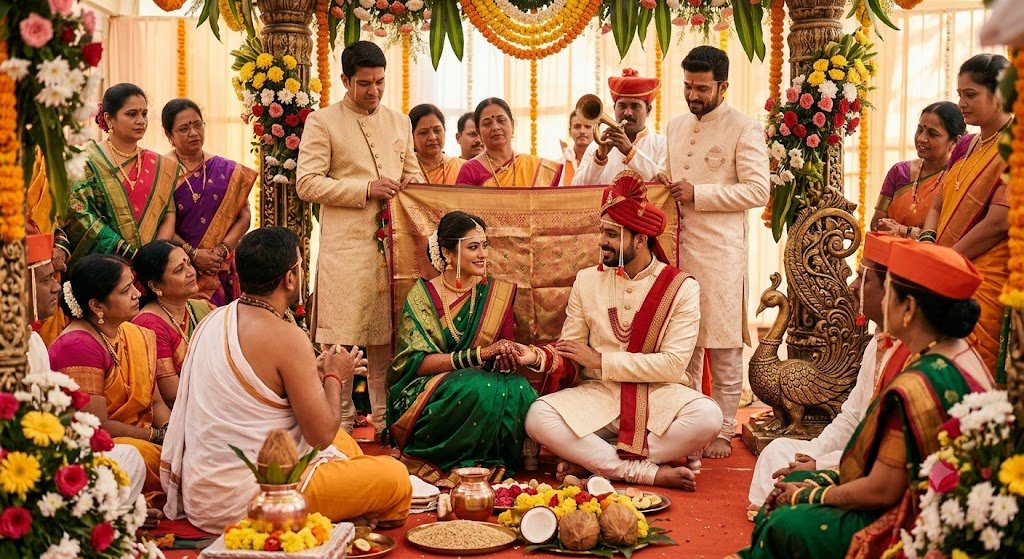


An Indian wedding isn’t one event. It’s a project: multiple functions, hundreds of decisions, dozens of vendors and two families with strong opinions. A good checklist doesn’t remove the stress, but it breaks the mountain into small steps you can finish one by one.
This guide is built around a 12-month timeline, with shorter versions for 6-month and 3-month plans. It also includes function-wise checklists, a vendor checklist, documents, a wedding-week plan and what to do after the wedding. Bookmark it, share it with your partner and family, and adjust it to your own traditions.
How Long Do You Need to Plan?
Advice varies. Most Indian planning guides recommend starting about 9 to 12 months ahead. One venue platform says to start an Indian wedding 9 to 12 months ahead, with budget and muhurat first, then venue, photographer, caterer and decorator. Another planner interviewed by a wedding magazine says the average Indian wedding takes about six months to plan. Peak-season dates, big guest lists and destination weddings need more lead time, while smaller weddings can be planned faster.
Rule of thumb: Start as early as you can, and book the biggest items first, because popular dates sell out.
How to Use This Checklist
- Count back from your wedding date, or jump to the stage you’re in.
- Assign owners: you, your partner, parents, siblings, a planner or a vendor.
- Adapt it to your community, number of functions and city.
- Review weekly: a 15-minute check-in keeps everyone aligned.
- Keep everything in one place: a shared folder or spreadsheet for budgets, quotes, contracts and contacts.
Phase 1: 12 Months Before, Lay the Foundations
- Talk to both families about expectations, traditions, functions and responsibilities
- Set your total budget and agree who contributes what. See our wedding budget planner for India.
- Create a first guest list, split into “must invite” and “would like to invite”
- Estimate the guest count for each function, since the haldi, sangeet and reception may differ
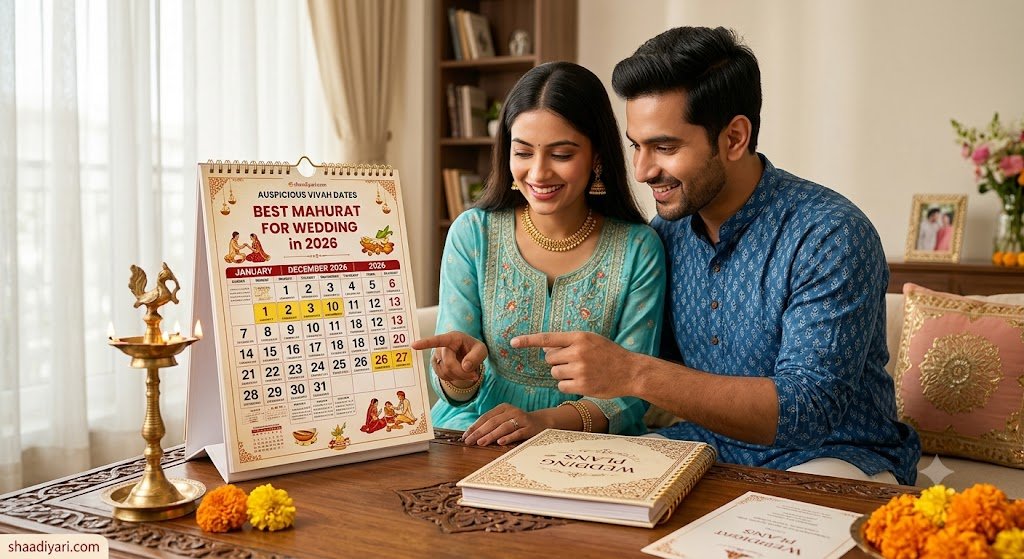
- Fix your muhurat or date range with your pandit, and keep two or three backup dates
- Choose your wedding style: city wedding, resort, destination or temple. See our guides on destination wedding expenses and temple weddings.
- Decide whether to hire a planner
- Shortlist cities and venues. Browse wedding venues on Shaadiyari.
- Start tours early for peak dates. One wedding magazine advises that due to high demand during Saaya dates, you should start your venue tours early.
Phase 2: 9 to 11 Months Before, Book the Big Things
☐ Visit and compare 3 to 5 venues. See our guide to finalising a wedding venue.
☐ Book your venue and read the agreement before paying the advance
☐ Book your photographer and videographer. Browse photographers.
☐ Book your caterer, if the venue allows outside catering, and schedule a tasting
☐ Book your decorator and discuss themes for each function
☐ Block hotel rooms for outstation guests and the baraat
☐ Start the guest list in a spreadsheet with phone numbers and addresses
☐ Start researching honeymoon destinations
☐ Start outfit research for bride, groom and family
Phase 3: 6 to 8 Months Before, Outfits, Beauty and Entertainment
☐ Shop for bridal and groom outfits. Explore bridal wear and groom wear.
☐ Plan outfits for every function: haldi, mehendi, sangeet, wedding, reception
☐ Order or plan jewellery and any custom pieces
☐ Book your mehendi artist. See mehendi artists.
☐ Book DJ, band or entertainers for the sangeet and baraat
☐ Start sangeet planning: performances, choreographer, rehearsal schedule
☐ Discuss rituals with your pandit, including the sequence, samagri and timing. See our Hindu wedding rituals guide.
☐ Send save-the-dates, especially for destination weddings and outstation guests. One wedding site recommends sending them 5 to 6 months before the wedding if you plan to use e-invitations.
☐ Start your skincare and fitness routine (consult a doctor or dermatologist if you have concerns)
Phase 4: 4 to 5 Months Before, Invitations and Logistics
☐ Finalise the guest list
☐ Design and order invitations. Hire a designer early if you want printed cards, and consider digital invites for cost and convenience. One wedding site advises that printed invitations should be couriered to long-distance family members and friends at least 4 months before the wedding.
☐ Book your bridal makeup artist, if you haven’t. One planning guide suggests booking three to four months before your wedding, or sooner on famous wedding dates. Browse bridal makeup artists.
☐ Plan guest travel and stay: arrival details, pick-ups, room allocation
☐ Finalise decor themes and colour palettes for each function
☐ Plan transport for the baraat, family and guests
☐ Plan return gifts and hampers. See our wedding gift ideas.
Phase 5: 2 to 3 Months Before, Finalise and Confirm
☐ Send invitations. Timing guidance varies. One brand’s guide recommends sending them at least 2 to 3 months in advance to give guests enough time to RSVP, and another wedding site calls three months before a decent timeline because it helps guests plan their schedules. Send earlier for guests who need to travel.
☐ Hand-deliver or call senior family members, if it’s your family’s tradition
☐ Track RSVPs in your spreadsheet and follow up with guests who haven’t responded
☐ Confirm all vendor bookings in writing, including dates, timings, inclusions and payment schedules
☐ Plan the pre-wedding shoot. One planning guide suggests booking it 2 to 3 months before the wedding. See our guides to Bhopal and Indore locations.
☐ Do outfit fittings and alterations
☐ Do your first makeup and hair trial
☐ Finalise the menu for each function
☐ Build the wedding-day timeline with your planner and photographer
☐ Plan seating for key rituals and the reception
☐ Prepare puja items with your pandit’s samagri list
☐ Gather documents for marriage registration (see the documents section below)
Phase 6: 1 Month Before, The Home Stretch
☐ Confirm final guest count with the venue and caterer
☐ Share the final schedule with all vendors and family members
☐ Finalise seating arrangements
☐ Settle pending payments and keep copies of receipts
☐ Do a second makeup trial if needed
☐ Pick up outfits and jewellery and check that everything fits
☐ Prepare the emergency kit (see below)
☐ Delegate tasks to trusted family and friends for each function
☐ Rehearse sangeet performances
☐ Confirm guest accommodation and transport
☐ Apply for marriage registration if your state allows advance filing
Phase 7: The Wedding Week
☐ Reconfirm every vendor by phone, and share the venue contact person
☐ Reconfirm transport and guest arrangements
☐ Confirm the pandit’s timing and samagri
☐ Prepare envelopes for tips and vendor balance payments
☐ Keep cash and a small purse for small expenses
☐ Charge phones and power banks
☐ Pack for the honeymoon
☐ Get enough sleep, drink water and eat well
☐ Do a final walk-through of the venue if possible
☐ Give important documents, jewellery and cash to one trusted person
☐ Assign a point person to handle vendor questions so you don’t have to
Function-Wise Checklists
Haldi
☐ Turmeric paste, flowers and seating
☐ Old or comfortable clothes for the couple and guests
☐ Towels, wipes and a change of clothes
☐ Photographer briefed on candid moments
☐ A clean-up area
Mehendi
☐ Mehendi artist(s) booked with enough time per guest
☐ Seating, cushions and snacks
☐ Music and a space for games or dance
☐ Plan the bride’s mehendi timing so she can rest after
Sangeet
☐ Performances rehearsed and music files tested
☐ Sound, lights and stage tested
☐ DJ or emcee briefed
☐ Food and drinks arranged for the evening
Wedding Day
☐ Muhurat time confirmed with the pandit
☐ Baraat route and timing arranged
☐ Ritual items kept near the mandap
☐ Garlands, rings and other essentials ready
☐ Photographer and videographer briefed on key rituals
☐ Meals for the bridal party and family before the ceremony
☐ Elders seated comfortably, with water and shade or heating
Reception
☐ Stage, lighting and decor tested
☐ Menu confirmed and counters arranged
☐ Emcee, music and schedule ready
☐ Guest book or video message station (optional)
Checklists by Role
For the Couple
☐ Agree on budget, priorities and non-negotiables
☐ Choose vendors, outfits and style together
☐ Handle your own trials, fittings and documents
☐ Set aside time as a couple, away from planning
For Parents and Elders
☐ Coordinate rituals, relatives and community customs
☐ Handle guest lists and invitations for their side
☐ Arrange family gifts, shagun and traditional items
☐ Keep an eye on elders’ comfort during long functions
For Siblings and Friends
☐ Take charge of specific tasks, like guest reception, transport or sangeet
☐ Manage the baraat, welcome kits and photo moments
☐ Help with last-minute errands during the wedding week
Vendor Checklist
For each vendor, make sure you have:
☐ A written contract with date, timings, inclusions and exclusions
☐ A payment schedule and receipts
☐ A contact person for the wedding day
☐ Cancellation and refund terms
☐ A backup plan for key vendors
☐ Meal and travel arrangements for the vendor team, if agreed
Core vendors to consider: venue, caterer, decorator, photographer, videographer, makeup artist, mehendi artist, DJ or band, pandit, transport, and planner. Compare options on Shaadiyari.
Questions to Ask Every Vendor
- What exactly is included in the price, and what costs extra?
- Are taxes and service charges included?
- What is your availability on my dates, and do you take other bookings that day?
- Can I see recent work and speak to recent clients?
- What is the payment schedule?
- What happens if there’s a delay, cancellation or change of date?
- Who will actually attend my wedding, you or a team member?
Documents Checklist
Requirements vary by state and community, so confirm with your local registrar or a lawyer. Commonly needed items include:
☐ Age proof and birth certificates
☐ Address proof, such as Aadhaar
☐ Passport-size photographs
☐ Wedding invitation card (some offices ask for it)
☐ Witness details and ID proofs
☐ Affidavits or additional documents as required by your state
☐ Temple certificate, if you marry in a temple. See our temple wedding guide.
Keep copies in a folder and a digital backup.
Wedding-Day Emergency Kit
☐ Safety pins, needle and thread
☐ Makeup touch-up kit and blotting papers
☐ Pain relief, antacids and any personal medication
☐ Band-aids and blister protection
☐ Fashion tape and hair pins
☐ Stain remover pen
☐ Mints, tissues and sanitiser
☐ Small snacks and water
☐ Phone charger and power bank
☐ Extra earring backs and jewellery clasps
☐ Spare footwear
☐ Cash and a small first-aid kit
Shorter Timelines
Planning in 6 Months
| When | Focus |
|---|---|
| Month 1 | Budget, guest count, date, venue and photographer |
| Month 2 | Caterer, decorator, planner, makeup and mehendi artists |
| Month 3 | Outfits, jewellery, invitations (digital, if time is short) |
| Month 4 | Guest travel, stay, entertainment and rituals planning |
| Month 5 | Fittings, trials, menu and decor finalisation, RSVPs |
| Month 6 | Confirm vendors, documents, emergency kit, final week prep |
Planning in 3 Months
A planning guide from Shaadiyari advises couples with limited time to book your venue and secure the date quickly, keep the guest list intimate, send digital invitations and book your planner within the first week.
- Weeks 1 to 2: Fix budget, date and guest count. Book the venue, caterer and photographer first.
- Weeks 3 to 4: Book decorator, makeup artist and pandit. Order or rent outfits.
- Weeks 5 to 8: Send digital invites, confirm guest travel and finalise menus and schedules.
- Weeks 9 to 12: Do fittings and trials, handle documents, confirm vendors and prepare the emergency kit.
Choose flexible dates, simpler decor and a smaller guest list to reduce pressure.
After the Wedding Checklist
☐ Register the marriage and collect your certificate
☐ Settle final vendor payments and collect receipts
☐ Return rented items (outfits, jewellery, equipment)
☐ Send thank-you messages to guests, family and vendors
☐ Write reviews for vendors who did a great job
☐ Collect photos and videos, and back them up
☐ Preserve special items: varmala, outfits and keepsakes
☐ Update your name and documents, if applicable, such as Aadhaar, passport, bank accounts and insurance
☐ Enjoy your honeymoon
Common Planning Mistakes to Avoid
- Booking a venue before fixing the guest count
- Not confirming vendor details in writing
- Ignoring hidden costs like overtime, taxes and decor setup fees
- Leaving outfit alterations too late
- Skipping makeup trials
- Trying to do everything yourself without delegating
- Sending invitations too late for outstation guests
- Forgetting to register the marriage
- Not planning rest and meals for the couple
Frequently Asked Questions
When should I start planning an Indian wedding?
Ideally 9 to 12 months ahead, especially for peak-season dates or destination weddings. Shorter timelines are possible with flexibility.
What should I book first?
Your date, venue, photographer and caterer, because popular ones fill up early.
When should I send invitations?
Many guides suggest about 2 to 3 months before the wedding, and earlier for guests who need to travel. Send save-the-dates 5 to 6 months ahead for outstation or destination weddings.
Do I need a wedding planner?
Not necessarily. A planner helps with large, multi-day or destination weddings, while smaller weddings can be managed with a well-organised family coordinator.
How do I keep track of everything?
Use a shared spreadsheet or notes app with columns for task, owner, due date and status.
What if my wedding is in 3 months?
Prioritise the venue, photographer and caterer first, keep the guest list small, send digital invites and consider a planner.
A good checklist turns a mountain of tasks into small steps. Start with the big decisions, book early, keep everything in writing and leave room to enjoy the process. The best wedding is the one where you’re present for it.
Ready to start? Explore venues, compare vendors and plan your wedding with Shaadiyari.